EMISSIONS
CERN’s commitment to minimising its impact on the environment includes a proactive approach to reducing its direct and indirect emissions, as defined by the internationally recognised methodology of the Greenhouse Gas Protocol and over which it has operational control.
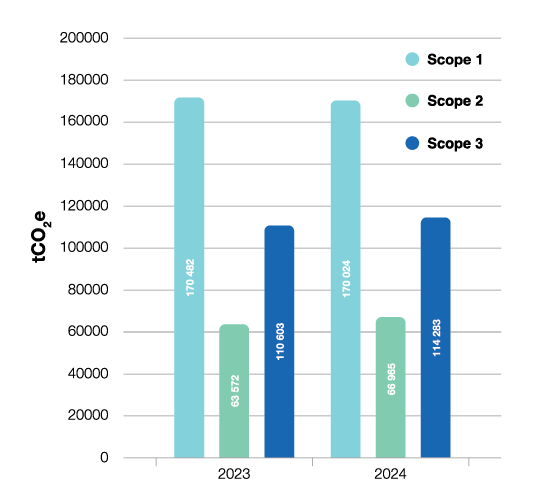
At CERN, scope 1 refers to the direct emissions resulting from the Organization’s facilities (including its experiments) and vehicles, while scope 2 refers to indirect emissions related to the electricity purchased for the Organization’s own use. Scope 3 refers to all other indirect emissions at CERN, arising from business travel, personnel commutes, catering, waste, water purification and procurement.
DIRECT EMISSIONS – SCOPE 1
The majority of CERN’s direct greenhouse gas (GHG) emissions come from its large experiments, which are the main focus of the Organization’s reduction efforts. These experiments use a range of gas mixtures for particle detection and detector cooling, with specific properties and characteristics, selected in order to optimise performance. These are mainly synthetic gases and refrigerants, including fluorinated gases (F-gases), some with a high global warming potential (GWP).
F-gases are widely used at CERN because they are highly effective for both detector cooling and particle detection. In cooling systems, they ensure that stable temperatures are maintained, which is crucial for highly sensitive equipment. In detectors, they play a key role in capturing particle interactions by detecting the passage of charged particles, offering excellent spatial and timing accuracy and in some cases providing light signals (Cherenkov radiation) allowing identification of different types of particles.
While intense R&D efforts to identify suitable alternative gases with a lower GWP continue, CERN published an F-Gas Policy in 2024 that formalises the Organization’s commitment and strategy to minimise the emissions of these gases. The policy will be implemented through a variety of measures ranging from efficient management and monitoring of the procurement and use of F-gases to appropriate training of personnel and proactive communication to stakeholders.
The reporting period spans two full accelerator operation (‘Run’) years. The total amount of scope 1 emissions was 170 482 tonnes of CO2 equivalent (tCO2e) in 2023 and 170 024 tCO2e in 2024. This is slightly lower than in 2022, the year in which Run 3 began, when 184 173 tCO2e were emitted.
Click to zoom in on figures.
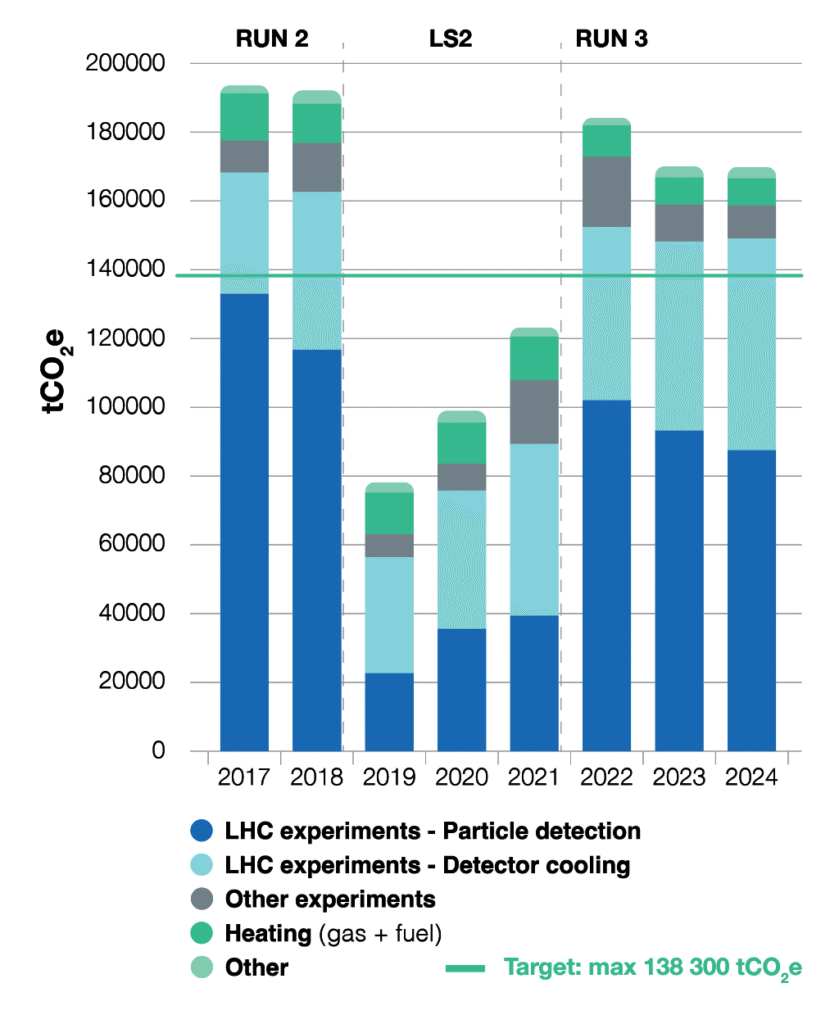
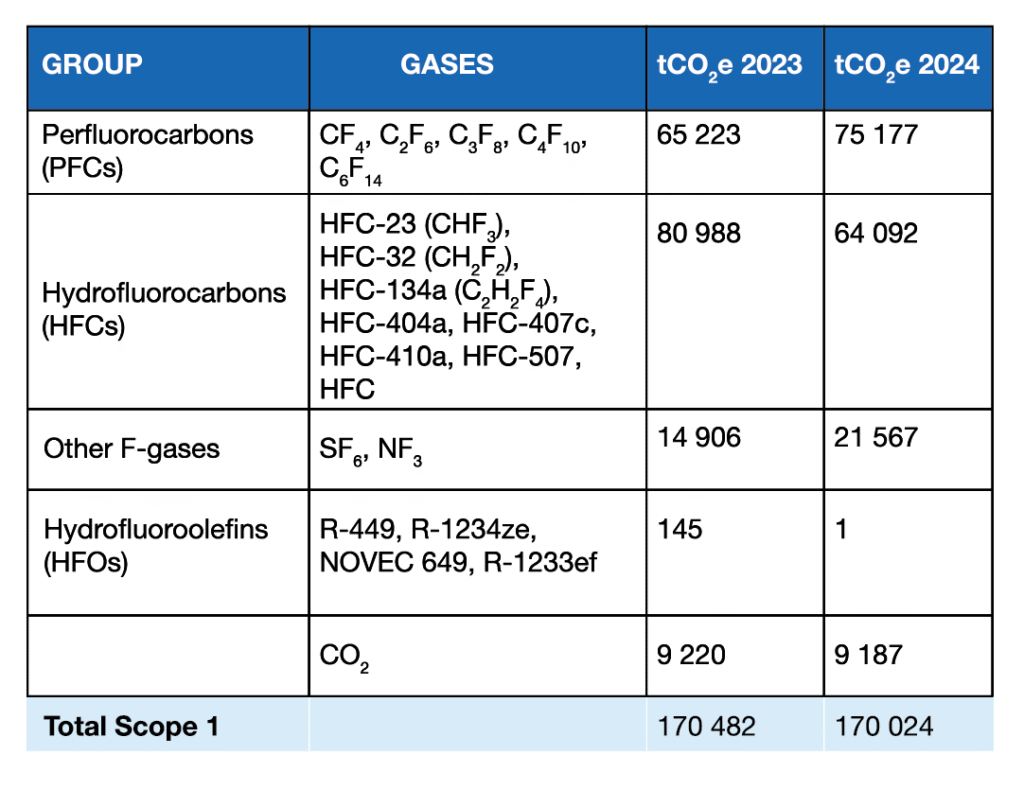
The tCO2e values have been calculated based on the real consumption of the different gases, weighted by their GWP. The GWP is based on the IPCC Fourth Assessment Report, 2007 (AR4), which is also the reference used in EU Regulation 517/2014 on fluorinated greenhouse gases. Future reports will adopt updated GWP values based on the IPCC Sixth Assessment Report (AR6). All previously reported emissions and associated reduction targets will be realigned accordingly.
A THREE-PILLAR EMISSION REDUCTION STRATEGY
CERN has a dedicated strategy to reduce its direct emissions arising from particle detection, detector cooling and detector design. The strategy comprises three pillars: gas recirculation, gas recovery and the search for alternative ecofriendly gases.
In the context of particle detection, the main contributors to CERN’s F-gas emissions are leaks in the gas distribution systems of some of the detectors. These leaks result from the complex mechanical integration of the detectors, which is driven by the need to fit them within the compact spaces that house them. This also complicates the task of identifying the origin of leaks. As leaks occur regularly, systematic leak-repair campaigns are organised to ensure that they are contained and minimised. The major leak-repair campaigns launched in ATLAS and CMS during the second long shutdown, LS2, continued in each Year End Technical Stop (YETS) and will resume in earnest during LS3, which is due to start in the middle of 2026. The leak repair procedure is carried out according to an optimised protocol, ensuring stable and reliable performance. In addition to repairing existing leaks, ATLAS has developed a new technique, which was applied during the last YETSs, consisting in injecting resin into the gas-inlet boxes to prevent the development of new leaks at the inlets. Preliminary results are promising, with a significant reduction of the development of new leaks observed in the boxes concerned.
Another strategy to reduce emissions from particle detectors involves diluting the mixtures that are currently used with gases with a lower GWP. In this vein, CO2 was introduced to replace 30% of the HFC-134a gas in the resistive plate chamber (RPC) detectors of the ATLAS experiment, and to replace some 10% of the CF4 gas in the LHCb experiment’s RICH2 detector.
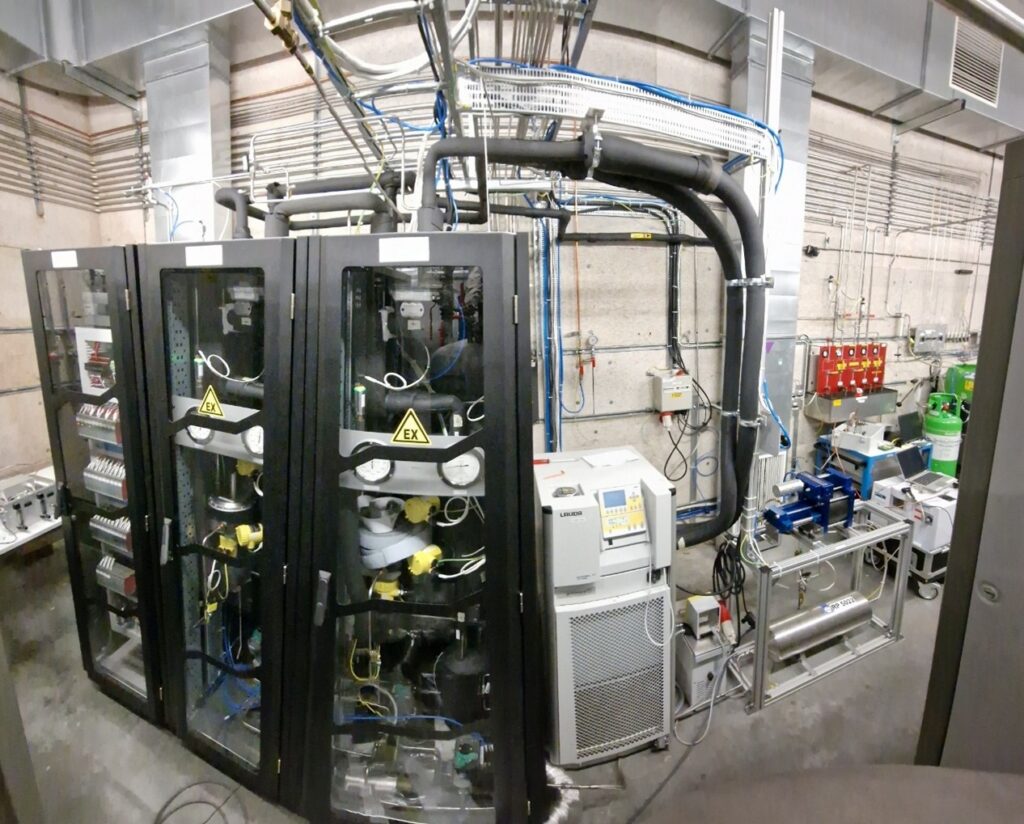
For the detector cooling systems, the experiments are advancing in the transition to CO₂-based cooling. Due to its efficiency in the temperature range around – 50 °C, CO₂-based cooling is a key component of CERN’s strategy to reduce its direct scope 1 emissions by 28% by the end of Run 3. Several systems have already adopted CO₂ cooling, and significant progress was made with the upgrades of the ATLAS and CMS inner detector cooling systems during the reporting period. In 2024, surface installation of the primary CO₂ cooling plants began, while underground installation of the secondary CO₂ plants is under way and will continue into the next Long Shutdown.
RECOVERY AND RECIRCULATION
Gas recirculation systems within an experiment reduce the need for new gas and cut down on emissions. Large-scale recirculation systems installed at CERN have proven their effectiveness in optimising gas use in a context where environmental impact and cost criteria are ever greater considerations. In order to decrease the relatively small contribution of emissions incurred during laboratory tests, in the reporting period CERN developed a micro-recirculation system for small-scale laboratory use, available as a “DIY” kit at low cost. Such a system is used for demonstrations at the CERN Science Gateway and has already been used in some laboratories in and outside CERN.
Gas recovery captures used gases, removes impurities and allows the valuable parts to be reused instead of being released into the atmosphere. A custom-made plant for the recovery of HFC-134a from the specific RPC detector gas mixture has been designed at CERN and has been fully operational at the CMS experiment since 2024. The plant is running at 80% recovery efficiency. Ongoing research is focused on developing a new system based on a different separation method to get as close as possible to the maximum recovery efficiency of about 90%.
Furthermore, a new C4F10 recovery plant for the RICH1 detector of the LHCb experiment was designed in 2024 and is under construction. It is due to be operational from 2025. This completely new design integrates two different working principles, flash evaporation and distillation column, to reach higher efficiency compared to the previous installation that dates back to the 1980s.
SEARCHING FOR ALTERNATIVE GASES
In addition to the increased use of CO2 to cool the detectors, the search for alternatives to the GHGs currently used in particle detection is a priority for CERN and the experiments. This applies to both currently installed and future detectors and requires extensive testing to guarantee good detector performance and lifetime.
Intensive research is under way to develop new gases with a lower GWP to replace SF6 and HFC-134a, focusing mainly on the hydrofluoroolefin (HFO) gas family. CERN and the experiments are testing new gas mixtures, including HFO-1234ze, for use in RPC detectors. Since the experiments are intended to operate for the decade following LS3, it is crucial to find gas mixtures that will not degrade components or affect performance over time.
INDIRECT EMISSIONS – SCOPE 2
EDF, CERN’s principal electricity supplier, generates low-carbon electricity, mainly of nuclear origin, which contributes to keeping energy-related emissions relatively low. The Organization reports according to the location-based methodology, with calculations based on average yearly emission factors taken from ADEME Base Empreinte©. In 2023 and 2024 respectively, scope 2 greenhouse gas emissions due to CERN’s electricity consumption were 63 572 and 66 965 tCO2e (see Energy).
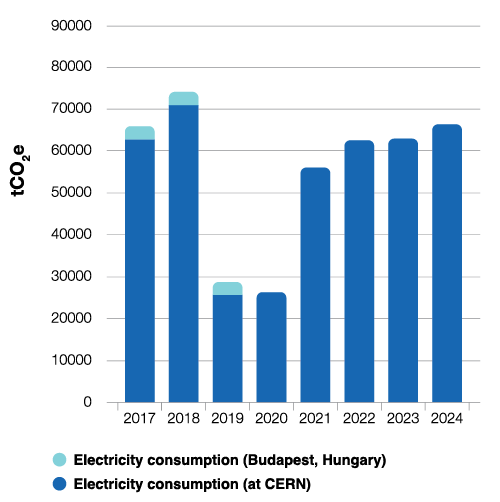
Emission calculations for electricity follow a location-based methodology, with average yearly emission factors taken from ADEME Base Empreinte© database. From 2017 to 2019, CERN operated a data centre at the Wigner Centre in Budapest, Hungary, for which the emissions are also shown. The location-based emission factors used for Hungary were taken from Bilan Carbone® V8.4.
OTHER INDIRECT EMISSIONS – SCOPE 3
CERN’s scope 3 emissions span waste treatment and water purification, business travel, personnel commutes, catering and procurement. The emissions for all categories — with the exception of procurement, which is reported separately below — were assessed using an operational control approach based on the GHG Protocol accounting standard, applying the ecoinvent and AGRIBALYSE emission factors to activity-based data, and used the 2021 GWP values of the Intergovernmental Panel on Climate Change (IPCC), which include all gases covered by the report “AR6 Climate Change 2021: The Physical Science Basis”. As required by the GRI standards and the GHG Protocol, biogenic emissions have been calculated using the IPCC 2021 methodology and are also reported in this chapter alongside fossil emissions. This is to account for the emissions from the biodegradation or combustion of biomass. CERN does not participate in any offset scheme.
Total scope 3 emissions excluding procurement amounted to 10 091 and 11 553 tCO2e in 2023 and 2024, respectively (1 487 and 1 794 tCO2e, respectively, for biogenic emissions). This represents less than 10% of the Organization’s total scope 3 emissions.
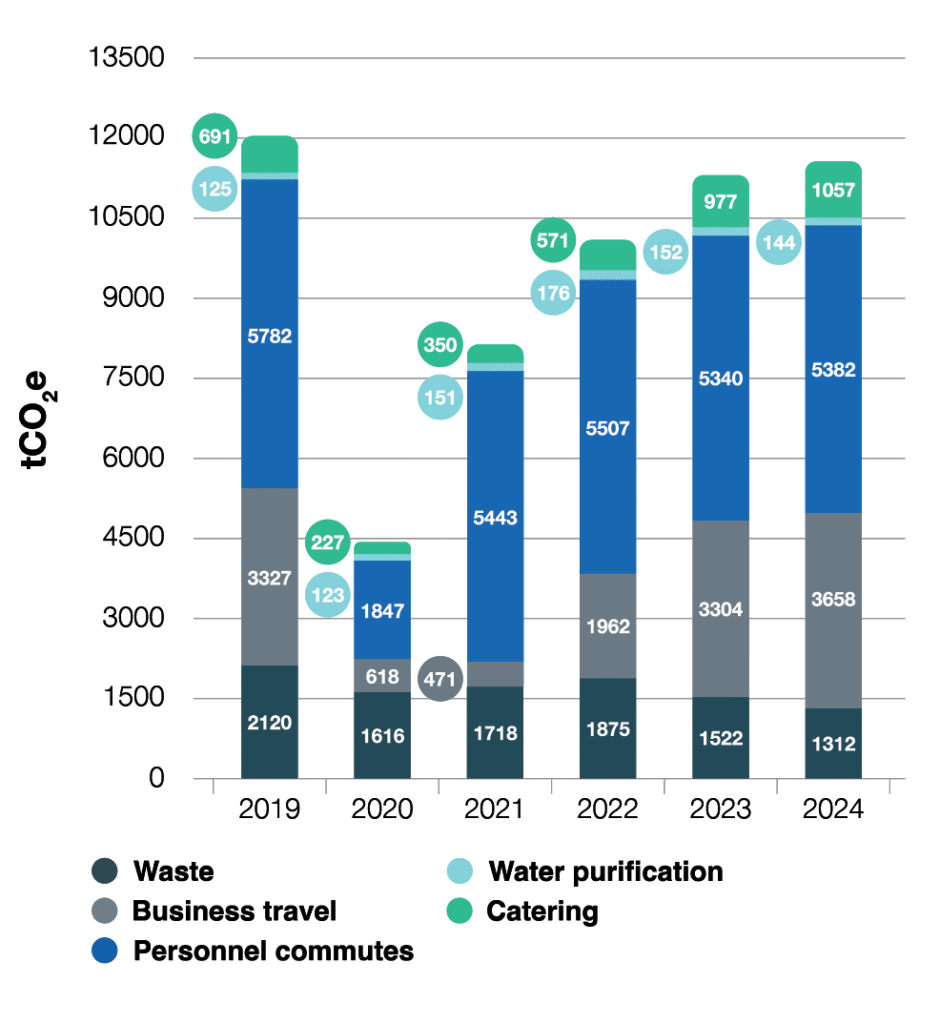
The calculation methodology is aligned with the GHG Protocol. The emission factors for 2023 and 2024 were retrieved from the ecoinvent 3.10 database for personnel commutes, waste and water and from the AGRIBALYSE 3.1 database for catering. The impact method used was IPCC 2021 GWP100 V1.01. Note that data for previous reporting years has not been recalculated for this report. Concerning business travel, a change in the source data used to compile travel data in 2021 led to miscalculations for the years 2021 and 2022, with return flights counted as one-way journeys. This has been corrected in the present report. Emissions arising from procurement are not included and are reported separately below.
WASTE TREATMENT AND WATER PURIFICATION
Waste includes the waste that is sent through the different elimination pathways, as well as the water that is sent to wastewater treatment plants. Indirect emissions arising from waste treatment amounted to 1 522 tCO2e and 1 312 tCO2e in 2023 and 2024 respectively (543 and 497 tCO2e, respectively, for biogenic emissions). Scope 3 emissions relating to water purification amounted to 152 and 144 tCO2e in 2023 and 2024 respectively (226 and 223 tCO2e, respectively, for biogenic emissions).
BUSINESS TRAVEL
This report focuses on business travel and commutes by personnel on the CERN payroll (approximately 5 000 people), as travel by CERN users falls outside the defined boundaries (see Management Approach). The travel of users is typically funded and managed by their host institutions, limiting CERN’s oversight. Given the size of CERN’s user community, their travel-related emissions are likely to significantly exceed those of personnel on CERN’s payroll, leading to a broader impact of the user network on travel emissions.
Emissions arising from business travel amounted to 3 304 tCO2e and 3 658 tCO2e in 2023 and 2024 respectively (4 tCO2e biogenic emissions in both years). Most of the emissions resulted from air travel, mainly long-haul flights.
A dedicated Duty Travel Working Group was set up in 2022 to provide guidelines on reducing duty-travel emissions without having a detrimental impact on CERN’s operations. The recommendations were approved by the CERN Enlarged Directorate in January 2024. They recognise and integrate the crucial importance of international collaboration for the advancement of CERN’s mission and research, while encouraging everyone to collectively set an example by reducing duty-travel-related carbon emissions. The recommendations include the objective of reducing air travel by considering virtual participation in meetings and conferences and discouraging single-day trips requiring air travel. Furthermore, the use of land transport (particularly train transport) is recommended for distances of up to 700 km, as transport options allow, taking into account time- and cost-efficiency. The recommendations also cover event guidelines to encourage organisers and participants to make mindful, environmentally conscious choices.
In parallel, travel services were optimised in 2024 with the implementation of a new travel booking system, which includes a feature indicating approximate emissions related to selected travel options, in a bid to further raise awareness among the CERN community.
PERSONNEL COMMUTES
Emissions resulting from commuting were calculated for personnel on CERN’s payroll. They amounted to 5 340 tCO2e and 5 382 tCO2e in 2023 and 2024 respectively (36 tCO2e biogenic emissions in both years). In addition, some 12 000 users regularly visit CERN for variable periods of time. Their emissions, as well as those of the contractors working on the site, are not included in the calculations.
By 2025, CERN aims to maintain current levels of individual motorised vehicle commuting, even as the scientific community grows. To encourage minimum reliance on private vehicles for its personnel, the Organization promotes alternative transport options, such as public transport and carpooling, and constantly seeks to improve the soft mobility infrastructure on its sites. A survey of mobility habits launched at the end of 2024 showed that 62% of CERN personnel use motorised vehicles to commute to CERN, including car sharing, which is stable compared to the last survey in 2022. 70% of CERN personnel commute to work from France, where the offer of public transport is less extensive than in Switzerland and the proportion of car users is slightly higher. The proportion of those walking and cycling to work is also stable and constitutes 23% of all commutes (24% in 2022).
CERN’s mobility plan is embedded in the CERN Masterplan 2040, the Organization’s vision in terms of future campus development for both of its main sites, Meyrin and Prévessin (see Biodiversity, Land Use and Landscape Change). A dedicated mobility working group meets regularly to review all aspects of mobility services and processes, including safety, car and bicycle rental solutions, public transport, soft mobility infrastructure and site access optimisation. Collaboration with the Host States aims at optimising the Laboratory’s transport infrastructure and accessibility while contributing to soft mobility projects of benefit for neighbouring towns.
In the reporting period, 95 e-bicycles and 20 e-scooters were added to the established fleet of some 500 bicycles available free of charge to members of the personnel, while the number of recharging stations for e-vehicles and bicycle and bus shelters increased. 1 000 new bicycle spaces, built on existing car parks, were created in the two years. CERN also operates a car sharing service, a rental car fleet and a comprehensive intra- and inter-site shuttle service. CERN’s professional car fleet comprises fewer than 700 vehicles and a plan for its progressive reduction by 25% and the introduction of electric cars – of which there are 20 to date – has been endorsed. The objective is to increase the number of electric vehicles to 50% of the fleet by 2030.
CATERING
CERN has three restaurants, six cafeterias and 75 vending machines on its sites, all run by external companies. The main provider is NOVAE, which operates all of the restaurants, five of the cafeterias and 45 of the vending machines. The restaurants served an estimated average of 2000 meals per day in 2024. The associated emissions are derived from the food products purchased before preparation and serving, while the energy used in the on-site kitchens for refrigeration and food preparation is included in CERN’s scope 2 data. CERN’s catering-related emissions were 977 tCO2e and 1 057 tCO2e in 2023 and 2024 respectively (678 and 1 034 tCO2e biogenic emissions). Red meat and dairy products make the biggest contributions to these emissions. Data granularity has improved and the application of updated methodology and emission factors, combined with a return to pre-pandemic levels in the use of the CERN restaurants, has led to an increase in emissions related to catering compared to previous years (see graph).
Continuous improvements are being made to further reduce single-use plastics and other waste.
NOVAE is updating its sustainability roadmap for the period until 2030, optimising its operations with a focus on food supply and origin, increasing the use of seasonal produce from local suppliers and making a continuous effort to reduce its carbon footprint; the company had managed to reduce the latter by 29% in 2024 by banning the use of air transport for its supplies, paying close attention to the provenance of fresh produce and exotic fruit and favouring produce of European origin.
At CERN, in a bid to reduce waste, the “ReCIRCLE” initiative involves serving meals in reusable packaging, which is subject to the payment of a deposit. The “No Gaspi” campaign comprises four consecutive weeks each year dedicated to measuring food waste, identifying the sources of waste and developing action plans to reduce it. In this campaign, the CERN restaurants scored highly with respect to the recommendations of the Swiss Confederation, meeting the best-practice target of 45 grammes of waste per meal; below this threshold, food waste is deemed to be well managed.
The average number of vegetarian dishes sold in NOVAE restaurants reached 30% in 2024 and efforts to encourage uptake continued, with a wider variety on offer. CERN’s main restaurant was awarded the 2050Today prize in the “Concours à Table!” sustainable catering competition run by the City and Canton of Geneva. The prize rewards community restaurants in international Geneva that provide an attractive and sustainable culinary offering (local, seasonal products, diversity of vegetarian options) and show initiative in reducing food waste.
SCOPE 3 EMISSIONS ARISING FROM PROCUREMENT
In 2023 and 2024, respectively, CERN’s spending on supplies, services and utilities amounted to around 573 MCHF and 612 MCHF. Of this, 484 MCHF in 2023 and 510 MCHF in 2024, i.e. some 84% of the total, was spent on supplies and services, whose emissions are classified as scope 3. Associated emissions amounted to 100 512 tCO2e in 2023 and 102 730 tCO2e in 2024. Procurement emissions represent some 90 % of the total CERN scope 3 emissions, and around 29 % of all CERN emissions.
The methodology used to calculate procurement emissions follows the Greenhouse Gas Protocol spend-based method, which establishes a direct correlation between expenses and the related amount of emissions, using emission intensity factors taken from the 2021 EXIOBASE 3 database; these factors have been updated with country-specific inflation rates for 2023 and 2024. The methodology also incorporates data derived from the Climatiq Procurement Endpoint model, which is based on basic prices and includes adjustment for inflation. Given the recognised limitations of the spend-based approach, CERN is proactively engaged in evolving towards the more precise activity-based methodology.
In 2023, the Enlarged Directorate approved the CERN Environmentally Responsible Procurement policy, with which several specific implementation actions are associated and under way (see Procurement and Materials). With regard to scope 3 emissions in particular, a comprehensive programme of engagement with CERN suppliers was initiated with a view to progressively moving to activity-based information that will improve the precision of procurement emission calculations. This approach will provide deeper insight into the key challenges and priorities, taking into account the complexity of CERN’s infrastructure and governance systems (see In Focus).
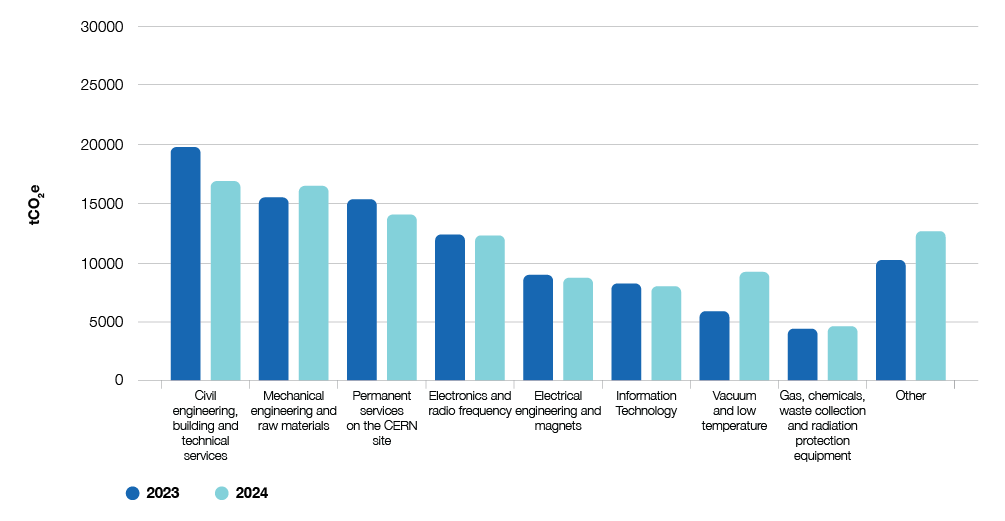
Click to enlarge. “Other” includes: office supplies, furniture, communication and training; transport, handling and vehicles; centralised expenses and codes for internal use; particle and photon detectors; health, safety and environment; optics and photonics. Note: the reported amounts concern both CERN budget expenses and expenditure on external funds for collaborations and experiments.
GOALS FOR 2030
By 2030, CERN’s scope 1 objective is to reduce emissions of greenhouse gases resulting from the Organization’s activities by 50%.
With regard to scope 2, CERN aims to keep direct and indirect emissions linked to energy constant with respect to 2018.
The objectives for scope 3 are: for commuting, to reduce individual motorised transport to 50%; for business travel, to reduce emissions by 30% compared to 2019; and for catering, to increase the offer of vegetarian/vegan meals to up to 50% of the total offer. For procurement, objectives are under development in the framework of the Environmentally Responsible Procurement Policy Project and will be reported in future reports.
IN FOCUS
Enrico Cennini is the leader of the CERN Environmentally Responsible Procurement Policy Project (CERP3) in CERN’s Procurement and Industrial Services group.
— How has CERN engaged with its suppliers to better understand the impact of procurement on CERN emissions across its supply chain?
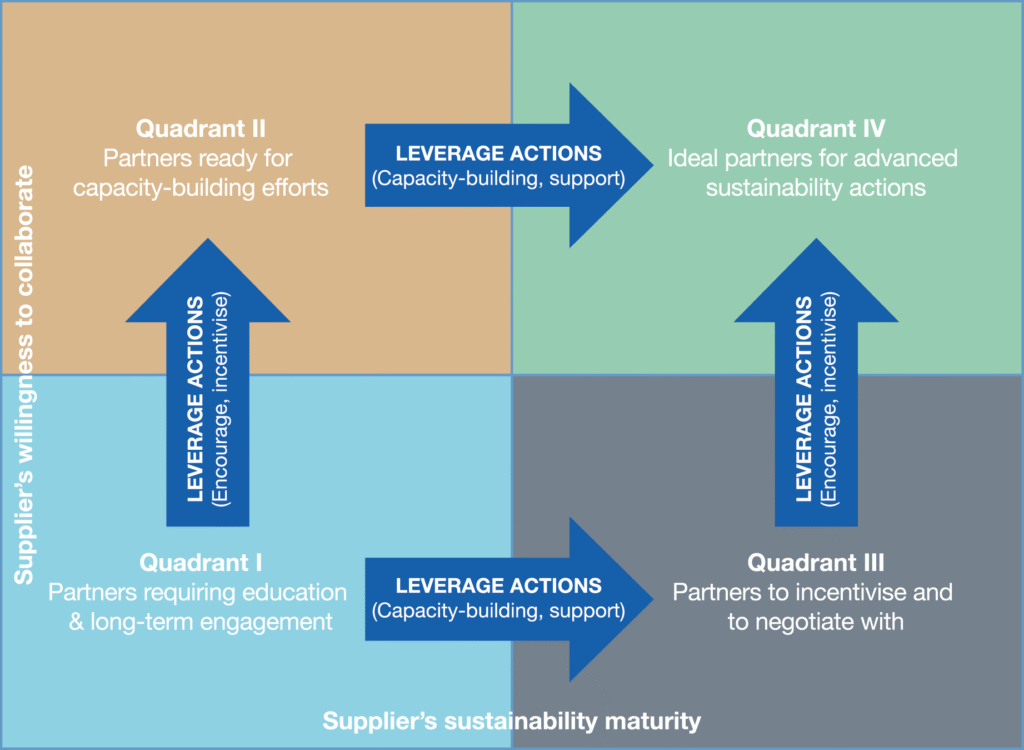
EC: The spend-based method we currently use at CERN to calculate emissions arising from procurement is effective in helping us to understand the indirect emissions arising from the supply chain and to identify those procurement families on which CERN can focus its decarbonisation efforts. As part of CERN’s supply chain capacity building initiative, we launched a survey of the largest suppliers in terms of spending and those responsible for 80% of scope 3 emissions (267 suppliers). The objective was to collect data on their environmental performance and more specifically on their carbon reduction strategies, classify them according to the Steel & Court Supplier Preferencing Model and elaborate tailored action plans for each category and procurement family (see figure). We focused on the six highest CO2-emitting areas: civil engineering; mechanical engineering and raw materials; services on the CERN site; electronics and radiofrequency; electrical engineering; and IT. These plans aim to enhance sustainability maturity across the supply chain and align efforts with CERN’s sustainability objectives. Sharing knowledge and engaging with peers is an essential building block of our efforts to refine our approach. In this vein, we participated in the international Scope 3 Peer Group Strategy Days in 2023 and 2024, which are designed to allow us to understand the latest evolutions and integrate best practices and lessons learnt in mitigating scope 3 emissions from procurement activities.
— What future actions are you planning?
EC: Our objective is to continuously evolve our procurement practices, internally and in close collaboration with our suppliers. On the one hand CERN will proactively embed environmental considerations wherever appropriate in tendering processes and request more detailed reporting from suppliers on their emissions. To support suppliers in embedding sustainability in their supply chain, we aim to facilitate access to relevant capacity-building resources and materials, such as CO2 emission calculation tools. Workshops will be organised to facilitate knowledge exchange and joint objective setting, with the first in 2025 for companies providing services on the CERN site. Additionally, we will evaluate a supplier sustainability due diligence tool in order to build a CERN supplier sustainability database. As part of our ongoing collaboration with peer laboratories, we will share insights on CERN’s sustainable procurement practices through presentations at established relevant working groups and conferences such as the Big Science Business Forum, which focuses on high-technology and innovation to bridge the gap between research infrastructures and industry in Europe.